The birth of the sugar shack
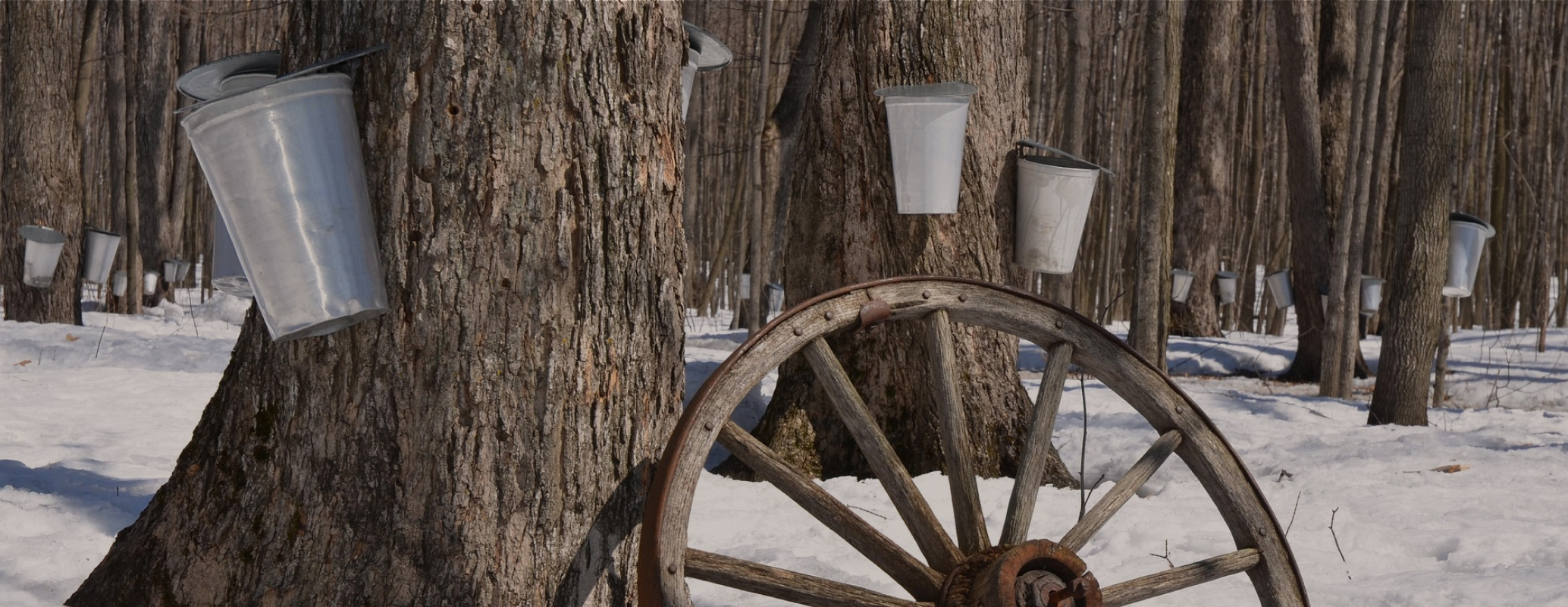
Europeans were introduced to this age-old know-how early in the colonization period. Over time, the methods for turning sap into syrup were refined. For decades, giant outdoor cast-iron cauldrons were used for boiling sap. Then came the idea of building a shelter for protection from the weather. Voilà—the first sugar shack!
Then and now
Bit by bit an agrotourism industry grew up around this precious resource. Today only a tiny minority of Québec’s 7,400 maple-syrup producers serve sugar-shack dinners. The local tradition that brings us together year after year is being kept alive by fewer than 150 sugar bushes.
Over the last ten years, nearly one-third (30.5%) of Québec’s sugar shacks have closed their doors. Many are planning to rebuild to concentrate exclusively on maple-syrup production. Others have resolved to shutter their operations or sell their sugar shacks to the highest bidder. In the midst of it all, those who are taking part in the joint “Ma cabane à la maison” initiative see it as a ray of hope.